Paper POP vs Acrylic Display: Which Should You Choose?
A comprehensive comparison of material costs, sustainability, visual impact, and brand perception to help you select the right display type for your retail strategy.
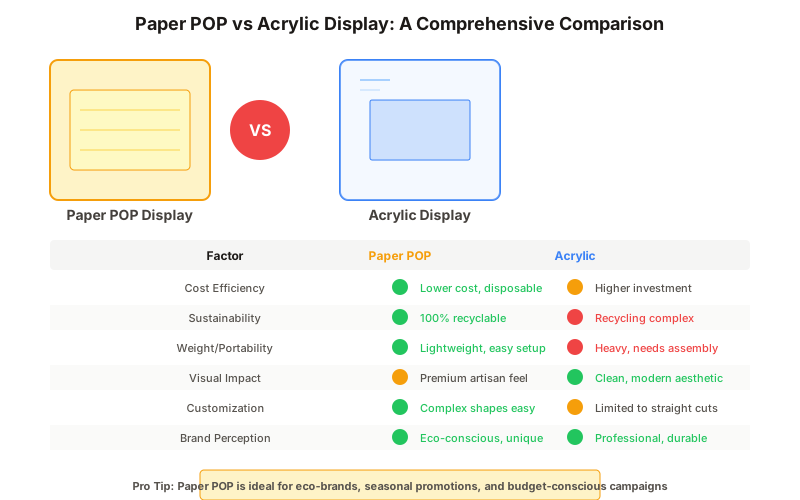
A comprehensive comparison of Paper POP and Acrylic displays across key decision factors.
When planning a POP display campaign, one of the most fundamental decisions is material selection. Two dominant options stand out: paper-based POP displays and acrylic displays. Each offers distinct advantages and trade-offs that can significantly impact your campaign effectiveness, budget, and brand perception.
This guide provides a detailed comparison across six critical factors: cost efficiency, sustainability, weight and portability, visual impact, customization capabilities, and brand perception. By the end, you will have a clear framework for making the right choice for your specific campaign needs.
Cost Efficiency: Paper POP Wins on Budget
Paper POP displays typically cost 30-60% less than comparable acrylic displays. The raw material cost of corrugated cardboard or paperboard is significantly lower than acrylic sheets. Additionally, paper displays are lighter, reducing shipping costs substantially—especially for international campaigns.
Paper POP Cost Advantages
- ✓Lower raw material costs (¥15-40/sqm vs ¥80-200/sqm for acrylic)
- ✓Reduced shipping costs due to lighter weight
- ✓Disposable— no retrieval or storage costs
- ✓Faster installation reduces labor costs
Acrylic Cost Considerations
- •Higher initial investment required
- •Heavy shipping for large displays
- •Requires secure storage between campaigns
- •Potential replacement costs if damaged
Sustainability: Paper POP Leads the Way
In an era where 68% of Asian consumers prefer sustainable packaging, paper POP displays offer a compelling environmental story. Most paper displays are 100% recyclable through standard paper recycling streams. When properly disposed, they biodegrade within 2-4 months. Acrylic, while recyclable, requires specialized recycling facilities that are less accessible in many markets.
Paper POP Environmental Benefits
Recyclable material
Months to biodegrade
Hazardous chemicals
For brands with active sustainability commitments, paper POP displays provide tangible proof points for marketing materials. FSC-certified displays add additional credibility and traceable chain-of-custody documentation.
Weight and Portability
Paper displays typically weigh 70-80% less than equivalent acrylic displays. This difference has profound implications for logistics and store operations:
Easier Store Delivery
Paper displays can be delivered flat-packed, dramatically reducing truck space and enabling more displays per shipment.
Simpler Staff Assembly
Most paper displays arrive pre-scored and require minimal assembly. Staff can set up displays in 2-5 minutes versus 15-30 minutes for acrylic.
Event Flexibility
Paper displays are ideal for trade shows, pop-up events, and temporary activations where portability is critical.
Visual Impact: Different Strengths
Both materials create compelling visual experiences, but their aesthetic qualities differ significantly:
Paper POP Aesthetic
- Premium Artisan Feel: Paper displays convey handcrafted quality and warmth that resonates with luxury and artisanal brands.
- Print Versatility: Full-spectrum color printing, textured surfaces, and specialty finishes like foil stamping.
- Tactile Appeal: Customers can touch and feel the display, creating a sensory connection.
- 3D Shaping: Complex curves and sculptural forms achievable through die-cutting.
Acrylic Aesthetic
- Modern, Clean Look: Transparent clarity creates a premium, contemporary feel.
- Product Visibility: See-through nature showcases products from all angles.
- Consistent Clarity: Does not warp, fade, or degrade over time.
- UV Resistance: Maintains appearance in bright retail environments.
Customization Capabilities
Paper POP displays offer significantly more design flexibility for complex shapes and forms. Modern die-cutting technology enables virtually any 2D shape to be cut from paperboard, including intricate curves, window cutouts, and interlocking tabs.
Paper POP Customization Options
Complex geometric shapes
Window and die-cut patterns
Multi-level tiered displays
Embossing and debossing
Acrylic displays, while limited to straight cuts and simple curves, offer precision and consistency that is difficult to achieve with paper. If your design requires exact 90-degree angles and perfect transparency, acrylic may be the better choice.
Brand Perception: Aligning Material with Identity
The choice between paper and acrylic communicates different brand values to consumers:
| Brand Identity | Recommended Material | Rationale |
|---|---|---|
| Eco-conscious / Sustainable | Paper POP | Recyclable, FSC available, clear environmental story |
| Luxury / Premium Beauty | Either | Paper for warmth; acrylic for modern clarity |
| Tech / Electronics | Acrylic | Modern, precise, clean aesthetic |
| FMCG / Consumer Goods | Paper POP | Cost-effective, disposable, high impact |
| Fashion / Apparel | Both | Depends on specific brand positioning |
Making the Final Decision
There is no universally correct answer—the right choice depends on your specific campaign requirements. Consider these decision triggers:
Choose Paper POP When:
- →Budget is a primary constraint
- →Sustainability messaging is important
- →Complex 3D shapes are required
- →Campaign duration is short-term
- →High volume, single-use deployment
Choose Acrylic When:
- →Long-term display durability is needed
- →Transparency and product visibility are key
- →Minimal maintenance is required
- →Premium tech brand positioning
- →Reusable display over multiple campaigns
Need Help Choosing?
Our team of display specialists can help you select the right material for your specific campaign requirements. We offer both paper POP and acrylic display solutions with full design and manufacturing support.
Get a Custom Display Quote