How to Choose Paperboard Materials for POP Displays
A comprehensive guide to selecting the right paperboard materials for retail displays, balancing durability, aesthetics, and sustainability goals.
Choosing the right paperboard material is one of the most critical decisions in POP display design. The material affects not only the visual appeal and structural integrity of your display, but also its environmental footprint, cost, and suitability for different retail environments.
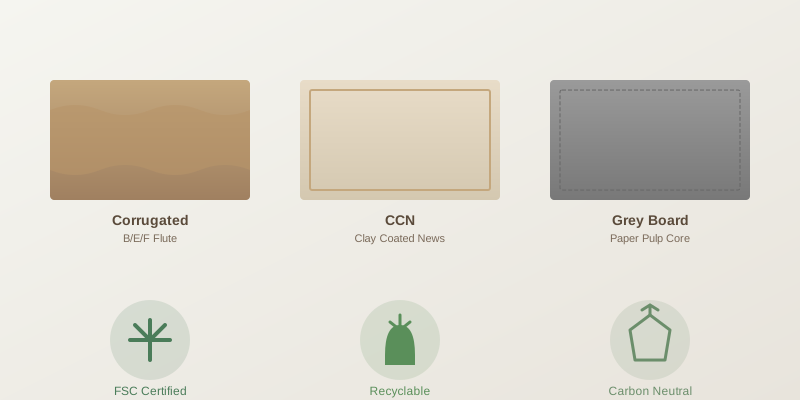
This guide covers the three primary paperboard types used in retail display manufacturing: corrugated board, CCN (Clay Coated News), and grey board. We'll explore their properties, best applications, and sustainability considerations to help you make informed decisions for your brand.
1. Corrugated Board: Strength Meets Versatility
Corrugated board is the workhorse of POP display materials. Its signature fluted interior structure provides exceptional compression strength and impact resistance while remaining lightweight. Available in multiple flute sizes—B flute (~3mm), E flute (~1.5mm), and F flute (~0.8mm)—each offers different balance of strength and print surface quality.
Best For
- • Floor displays and dump bins
- • High-capacity retail environments
- • Products requiring structural support
- • Large-format displays
Key Advantages
- • High compression strength
- • Excellent printability for vibrant graphics
- • Fully recyclable and biodegradable
- • FSC-certified options available
Sustainability note: Corrugated board is the most recyclable paper product in the world. Look for double-wall or triple-wall corrugated constructed from FSC-certified virgin fiber or recycled content to minimize environmental impact while maintaining structural performance.
2. CCN (Clay Coated News): Premium Print Quality
CCN combines a newsback core with a smooth clay coating on one or both sides. This creates an ideal printing surface with excellent ink holdout and color reproduction. The coating also provides moisture resistance and a premium tactile feel that elevates brand perception on retail shelves.
Best For
- • Counter displays and countertop POS
- • Premium brand showcases
- • Photographic-quality printing
- • Jewelry, cosmetics, and luxury goods
Key Advantages
- • Superior print surface
- • Smooth, premium tactile feel
- • Good rigidity and flatness
- • Excellent color gamuts
Sustainability note: Many CCN manufacturers now offer water-based coatings and recycled core options. The clay coating itself is non-toxic and can be repulped in standard recycling streams. For luxury applications, look for CCN with FSC-certified core stock and low-VOC coatings.
3. Grey Board: Economy and Recyclability
Grey board is manufactured from 100% recycled paper pulp, typically post-consumer waste. While it lacks the print quality of CCN or the strength of corrugated board, it offers excellent cost efficiency and environmental credentials. It's ideal for products where the display is not the primary brand carrier or where budget constraints are a factor.
Best For
- • Heavy products with internal packaging
- • Short-term promotional displays
- • Tuck-in packaging boxes
- • Sample kits and gift sets
Key Advantages
- • 100% post-consumer recycled content
- • Lowest material cost
- • Fully recyclable
- • Good stiffness for vertical stacking
Sustainability note: Grey board is the most eco-friendly option, typically containing 80-100% post-consumer fiber. It requires no additional forest resources and reduces landfill burden. Look for grey board certified by FSC recycled or Green Seal to ensure verified environmental claims.
Material Comparison at a Glance
| Material | Strength | Print Quality | Cost | Eco Score |
|---|---|---|---|---|
| Corrugated (B/E/F flute) | ★★★★★ | ★★★★ | $$ | ★★★★☆ |
| CCN (Clay Coated News) | ★★★☆☆ | ★★★★★ | $$$ | ★★★☆☆ |
| Grey Board (100% recycled) | ★★★☆☆ | ★★☆☆☆ | $ | ★★★★★ |
Making Sustainable Choices
Sustainability in paperboard selection isn't just about choosing recycled materials—it's about the entire lifecycle. Here's how to evaluate your options:
FSC Certification
Look for FSC-certified materials. This ensures responsible forest management and verified supply chain. FSC Chain of Custody documentation is essential for sustainability claims.
Recycled Content Percentage
Higher post-consumer recycled content reduces demand for virgin fiber. Grey board typically contains 80-100% recycled content, while corrugated can include varying amounts.
End-of-Life recyclability
All three materials are recyclable. However, CCN with heavy coating may be harder to process—check with your local recycling facility. Corrugated has the highest recycling rates globally.
Carbon Footprint
Consider manufacturing location relative to your market. Local production reduces transportation emissions. Some manufacturers offer carbon-neutral products through offset programs.
Frequently Asked Questions
Can I use different materials in one display?
Absolutely. Many POP displays combine materials strategically—for example, using corrugated for the structural base and CCN for the branding header. This approach optimizes cost while maximizing visual impact. Work with your manufacturer to specify the right material for each component.
How do I calculate the right thickness for my display?
Material thickness depends on product weight, display dimensions, and structural requirements. As a rule: heavy products (>2kg) need E or B flute corrugated; medium products (0.5-2kg) can use F flute or CCN; light products (<0.5kg) work well with CCN or grey board. Consult with your display manufacturer for specific recommendations.
What coating options improve durability?
Aqueous coating provides water resistance and scuff protection. UV coating offers higher gloss and harder surface. Soft-touch coating creates a premium matte feel. For sustainable options, ask about water-based and vegetable-based coatings with low VOC content.
Need Help Selecting the Right Material?
Our engineering team will recommend the optimal material combination for your specific display requirements, budget, and sustainability goals.
Request Material Consultation →