
Temporary Retail Display Solutions: A Complete Guide
From campaign launches to seasonal promotions, temporary displays offer maximum impact at minimum cost. Learn how to select, deploy, and responsibly dispose of short-term POP displays.
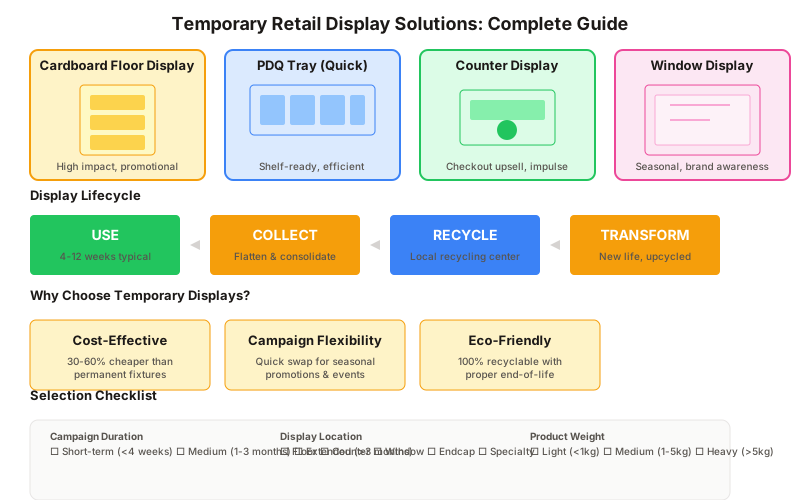
Four main types of temporary retail displays and their typical lifecycle management.
Temporary retail displays—also known as short-term, campaign, or disposable POP displays—are designed for finite use periods ranging from a few weeks to several months. They represent one of the most cost-effective ways to drive incremental sales, launch new products, or create seasonal excitement in retail environments.
This guide covers the four primary types of temporary displays, how to select the right option for your campaign, and best practices for responsible end-of-life management.
Four Main Types of Temporary Displays
Each display type serves different retail contexts and campaign objectives. Understanding their unique characteristics helps you match format to purpose.
Cardboard Floor Display
The high-impact workhorse of temporary retail
Characteristics
- • Height: 1.2m - 1.8m (floor-standing)
- • Large product capacity (24-100+ units)
- • Usually shipped flat, quick assembly
- • Often branded as "take one" promotion vehicles
- • Typical campaign: 4-12 weeks
Best For
- • New product launches
- • High-volume promotional items
- • Brand awareness campaigns
- • Grocery, pharmacy, electronics retail
- • Endcap and feature floor positions
PDQ Tray (Pretty Damn Quick)
Shelf-ready efficiency for rapid deployment
Characteristics
- • Pre-filled, pre-packed display trays
- • Ships assembled, shelf-ready
- • Compact footprint (fits standard shelf)
- • Usually 12-48 unit capacity
- • Typical campaign: 2-8 weeks
Best For
- • Quick restocking scenarios
- • Space-constrained retail environments
- • Multiple SKU promotions
- • Convenience stores, cosmetics
- • Mid-shelf and counter positions
Counter Display
Impulse purchase powerhouse at the point of decision
Characteristics
- • Compact: typically 20-40cm height
- • Placed at checkout counters
- • High visibility, impulse items
- • Usually 6-24 unit capacity
- • Typical campaign: 2-6 weeks
Best For
- • Impulse purchase products
- • Travel-size and miniature formats
- • Last-minute gift solutions
- • Pharmacies, convenience, airports
- • Near-registers positioning
Window Display
Brand storytelling through seasonal visual impact
Characteristics
- • Large format visual impact
- • Primarily brand awareness focused
- • Usually product-less (brand messaging)
- • Complex designs possible
- • Typical campaign: 2-4 weeks
Best For
- • Brand launch events
- • Seasonal campaigns (holidays)
- • Flagship store activations
- • Fashion, beauty, luxury retail
- • Mall and storefront windows
The Temporary Display Lifecycle
Understanding the complete lifecycle of a temporary display helps you plan for responsible disposal and cost optimization:
Deploy
4-12 weeks active in-store
Collect
Flatten and consolidate
Recycle
Paper recycling stream
Transform
Upcycled into new products
Pro Tip: Negotiate display retrieval into your retail partner agreements. Many chains have established display recycling programs that can handle collection and processing for you, often at no additional cost.
How to Select the Right Temporary Display
Use this decision framework to match display type to campaign requirements:
| Criteria | Floor Display | PDQ Tray | Counter | Window |
|---|---|---|---|---|
| Duration >8 weeks | ✓✓✓ | ✓ | ✗ | ✓ |
| High product volume | ✓✓✓ | ✓✓ | ✓ | ✗ |
| Impulse purchase | ✓ | ✓✓ | ✓✓✓ | ✗ |
| Limited floor space | ✗ | ✓✓✓ | ✓✓✓ | ✗ |
| Brand awareness focus | ✓✓ | ✓ | ✓ | ✓✓✓ |
| Quick deployment | ✓✓ | ✓✓✓ | ✓✓✓ | ✓ |
✓✓✓ = Excellent fit | ✓✓ = Good fit | ✓ = Possible | ✗ = Not suitable
The Economic Case for Temporary Displays
Temporary displays typically cost 30-60% less than permanent fixtures, but the savings go beyond the initial price tag:
Lower initial cost vs. permanent displays
Less shipping volume (flat-packed)
Storage costs between campaigns
Total Cost of Ownership Factors
Costs to Consider:
- • Display unit cost (unit price × quantity)
- • Shipping and logistics
- • Installation labor
- • Retrieval and disposal
- • Potential product damage during display
Savings vs. Permanent:
- • No storage between campaigns
- • No cleaning and maintenance
- • No replacement for damage or theft
- • No refurbishment costs
- • Flexibility to update design frequently
Best Practices for Temporary Display Success
Plan for Retrieval Day One
Design the retrieval logistics before you design the display. Include retrieval instructions on the display itself and negotiate terms with retail partners in advance.
Match Durability to Campaign Length
Do not over-engineer temporary displays. A 4-week campaign does not need materials rated for 6 months. Right-size your materials to minimize cost and waste.
Specify Clear Assembly Instructions
Retail staff have limited time. Include visual, step-by-step assembly guides printed directly on the display panels. This reduces labor costs and incorrect assembly.
Communicate Environmental Credentials
If your displays are recyclable, say so on the display. Many consumers will engage with recycling messaging, and retail partners appreciate displays that integrate with their sustainability programs.
Track and Measure
Work with retail partners to establish baseline sales data before display deployment and measure incremental lift during the campaign. This data justifies future investments.
Ready to Launch a Temporary Display Campaign?
We specialize in temporary display design and manufacturing for campaigns of all sizes. Our team can help you select the right format, optimize for cost, and ensure responsible end-of-life management.
Get a Temporary Display Quote