How to Choose the Right Material for Your Paper POP Display
A comprehensive guide to CCNB board, E-flute corrugated, grey board, finish options, and FSC certification for retail displays.
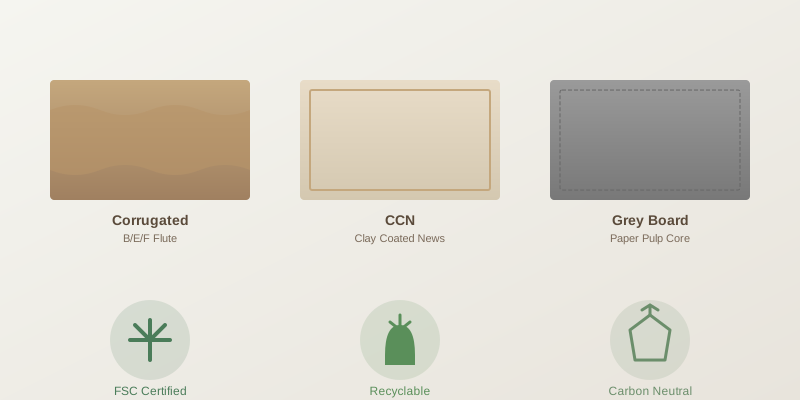
A comparison of common paper POP display materials and their key properties.
Material selection is one of the most critical decisions in paper POP display design. The right material ensures your display withstands handling, showcases your product effectively, and aligns with your brand values and budget constraints.
This guide covers the three most common paper display materials, their specific applications, finish options, and a practical decision framework to help you select the optimal material for your retail display campaign.
Common Paper Display Materials
Understanding the fundamental properties of each material helps in making informed decisions for your specific retail environment and product requirements.
CCNB Board (Clay Coated News Back)
CCNB is a coated paperboard made from recycled paper pulp with a smooth clay coating on one or both sides. It offers excellent printability and is the most cost-effective option for short-term promotions.
Weight Range
Thickness
Print Quality
Cost Level
Best for: Counter displays, PDQ trays, and short-term promotional displays where cost efficiency is paramount.
E-Flute Corrugated Board
E-flute is a type of corrugated board with approximately 90 flutes per linear foot. It provides excellent crush resistance and structural integrity while maintaining a relatively smooth surface suitable for high-quality printing.
Thickness
Compression Strength
Print Quality
Cost Level
Best for: Floor displays, dump bins, and displays requiring stronger load-bearing capacity or dimensional stability.
Grey Board (Chipboard)
Grey board is a solid board made from compressed recycled paper pulp. It provides excellent rigidity and is ideal for products requiring a sturdy base or heavy load-bearing displays.
Common Thickness
Rigidity
Print Quality
Cost Level
Best for: Display bases, counter card holders, and structural components requiring maximum rigidity.
Material Selection Guide by Application
Different display types have distinct material requirements based on size, placement, product weight, and campaign duration.
| Display Type | Recommended Material | Reason |
|---|---|---|
| Floor Displays (Free-Standing) | E-Flute | High compression strength needed to support product weight and prevent crushing |
| Counter Displays | CCNB Board | Compact size, lighter products, excellent print quality for shelf presence |
| PDQ Trays | CCNB Board | Cost-effective for high volumes, flat-packed shipping efficiency |
| Dump Bins | E-Flute | Must withstand product weight and repeated handling by customers |
| Power Wing Displays | E-Flute | Requires good compression strength and ability to hang from peghooks |
Finish Options for Enhanced Visual Appeal
Surface finishes protect the print and add premium visual effects that elevate brand perception and shelf presence.
Matte Lamination
- ✓Provides a non-reflective, sophisticated finish
- ✓Protects print from moisture and scuffing
- ✓Cost-effective option for volume orders
- ✓Ideal for luxury and premium brand positioning
Soft-Touch Lamination
- ✓Velvety texture creates premium tactile experience
- ✓Enhanced perceived value and brand quality
- ✓Excellent scratch and fingerprint resistance
- ✓Popular for cosmetics and beauty products
UV Spot Coating
- ✓Highlights specific design elements with glossy finish
- ✓Creates contrast and visual hierarchy
- ✓Adds dimension and tactile interest
- ✓Effective for logos and call-to-action elements
Foil Stamping
- ✓Creates metallic shine in gold, silver, or custom colors
- ✓Premium appearance for high-end brands
- ✓Highly durable and scratch-resistant
- ✓Perfect for logos and decorative accents
Why FSC Certification Matters
Forest Stewardship Council (FSC) certification provides independent verification that paper and wood products come from responsibly managed forests that provide environmental, social, and economic benefits.
Benefits of FSC-Certified Displays
Promotes sustainable forestry, protects biodiversity, and prevents deforestation
Demonstrates environmental commitment to consumers and strengthens brand credibility
Increasingly required by major retailers and preferred by eco-conscious buyers
Note: FSC certification typically adds 5-15% to material costs but provides significant marketing value for brands with sustainability commitments. Many European and North American retailers now require FSC certification for paper displays in their stores.
How to Decide: A Quick Decision Guide
Use this simple decision framework to narrow down the right material for your display project.
What is your display type?
Floor display or dump bin? Choose E-flute for strength. Counter display or PDQ? CCNB board is most cost-effective.
How much product weight will it support?
Heavy products (over 5kg): Use E-flute with reinforced construction. Light products (under 2kg): CCNB board is sufficient.
What finish level do you need?
Budget campaign: Standard matte lamination. Premium positioning: Soft-touch lamination or foil stamping.
Is FSC certification required?
Required by retailer: Specify FSC-certified materials upfront. Optional but valued: Consider adding FSC for brand differentiation.
Need Material Recommendations?
Our engineering team can recommend the optimal material and finish combination for your specific display requirements, budget, and sustainability goals.
Get a Material Consultation